Solving ocean crises by unifying and empowering global communities!sm
With the help of donors like you, OpenOceans Global is developing solutions to save our ocean.
With the help of donors like you, OpenOceans Global is developing solutions to save our ocean.
Title search: ✖
|
Show All (49)
General (8) OpenOceans News (2) OPP Initiative (1) Plastic Treaty (9) Press Releases (2) Solutions (8) Trash and Plastics (24) White Papers (1)
New Report Provides Global Criteria to Address Problematic, Unnecessary, and Avoidable Plastic Products
Corporate Plastic Pollution Scorecard provides an in-depth review of the plastic packaging practices
|
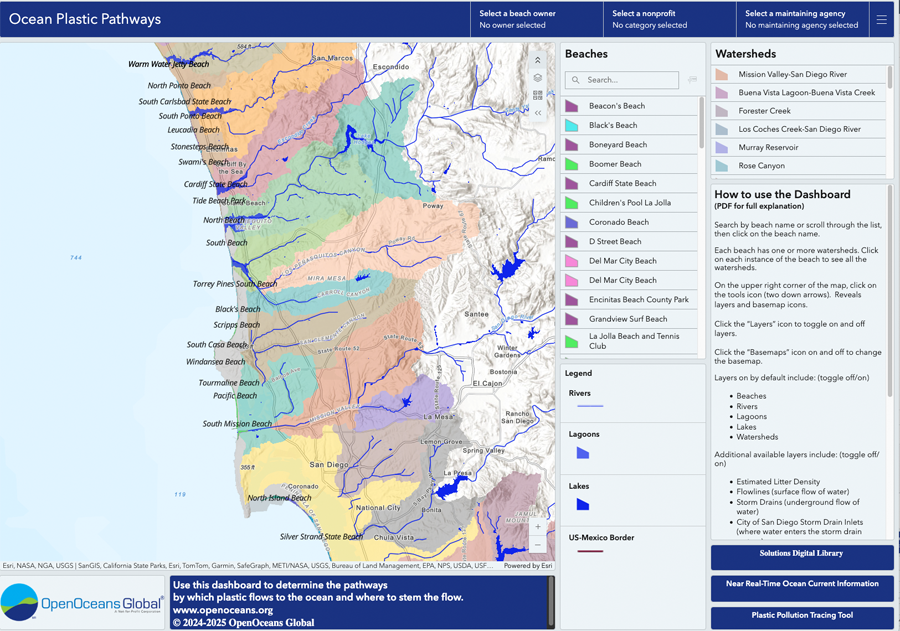
2025 was a breakthrough year for OpenOceans Global. With a small budget and an extraordinary team of dedicated volunteers, we achieved more than we ever imagined. Here are a few highlights from the past year showing the impact of our work. Ocean Plastic Pathways (OPP) Prototype Readied for Implementation We refined our Ocean Plastic Pathways (OPP) prototype, positioning the dashboard and predictive model for use anywhere needed in the world. OPP provides the tools needed to determine the pathways by which ocean plastic reaches beaches and the ocean and identifies where plastic leaks into those pathways. This readies regions to implement solutions to stop the flow of plastic.
OPP Pilot Launched with GEO Tierra Ecuador as RuPO OpenOceans launched a pilot OPP initiative in Ecuador and the Galápagos Islands, in collaboration with GEO Tierra Ecuador, its member agencies, researchers, Esri Ecuador, and local organizations. The work began by finding beaches affected by plastic pollution and assembling the local data to begin tracing the pathways of plastic from their sources. The group called themselves RuPO, an acronym for La Ruta del Plástico al Océano, which is Spanish for Ocean Plastic Pathways (OPP). The RuPO team designed a logo using OpenOceans' colors to express their unity.
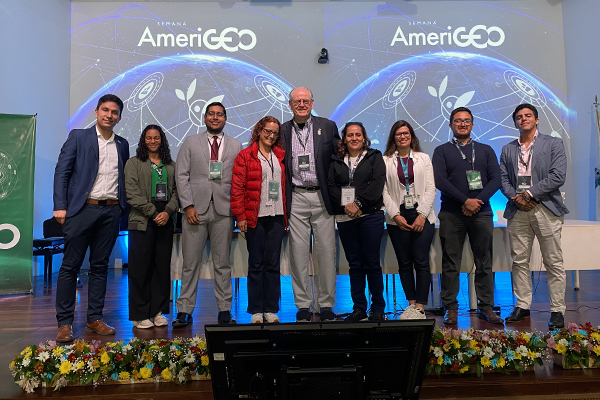
RuPO/OPP Showcased at AmeriGEO International Conference Our international RuPO team hosted a four-hour workshop at AmeriGEO 2025 in Bogotá, Colombia. OpenOceans also participated in a plenary session and socialized the RuPO initiative to other countries in the Americas. In addition, we brought together scientists to share Ecuador’s knowledge of plastic, ocean current transport of plastic, and the Galápagos.
The RuPO/OPP team at AmeriGEO 2025. Image credit: Geo Tierra Ecuador OPP initiative Shared at UN Plastic Treaty Negotiations OpenOceans was credentialed to attend the United Nations Plastic Pollution Treaty talks in Geneva, Switzerland. This allowed us to expand our global network and connect with organizations equally committed to solving the ocean plastic pollution crisis. The OPP initiative was socialized, highlighting its critical importance in the face of stalled global policy agreements.
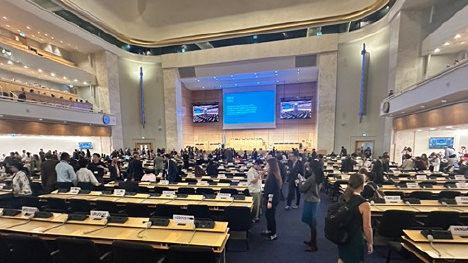
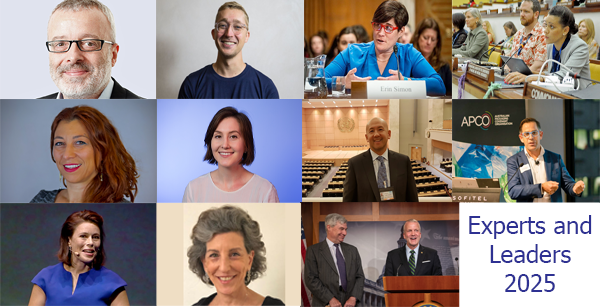
The UN’s main meeting chamber for plenary sessions in Geneva. Image credit: Carl Nettleton Recognizing More Experts and Leaders in 2025 Solving the ocean plastic crisis is ultimately about people. From the UN policy tables to reporters to volunteers removing plastic in the environment, it takes people with subject matter expertise, good hearts, and willpower. For the last three years, OpenOceans has recognized people of goodwill working to solve the problem in The Transition, our monthly newsletter. We have introduced you to 75 individuals from around the globe who could be important in determining the path to a plastic-free ocean. Here are the 12 people recognized in 2025.
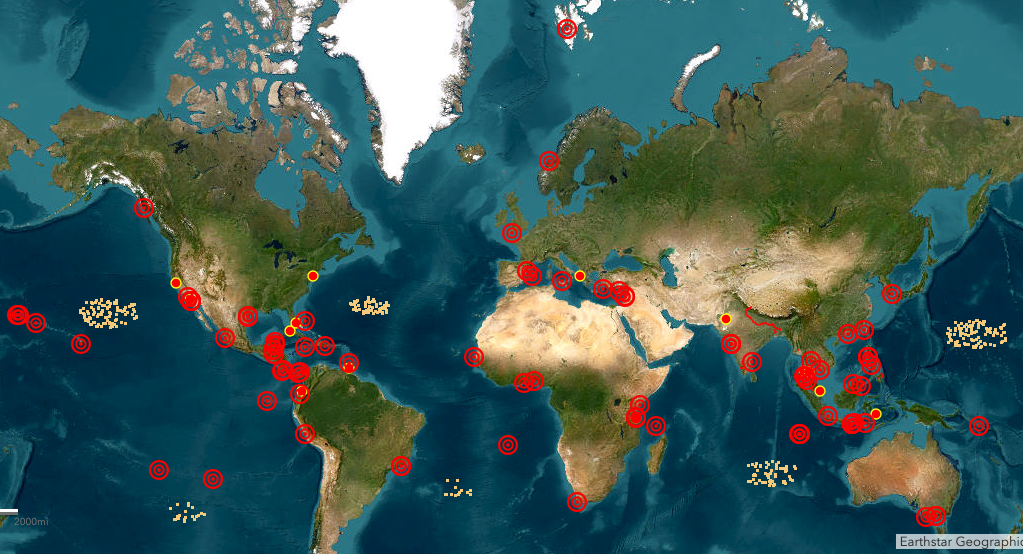
From left to right, top to bottom): Charles Goddard, Editorial Director, Economist Impact; Karsten Hirsch, Co-Founder and CEO, Plastic Fischer; Erin Simon, Vice President and Head, Plastic Waste and Business, World Wildlife Fund; Minna Epps, Global Ocean Director, IUCN; Maria Tsakona, Senior Expert, Waste and Marine Litter, GRID Arendal; Elizabeth McCauley, Lead Producer, Business Insider; Christopher Chin, Executive Director, Coare; Anthony Peyton, Founder and Director. PREP Design; Dr. Jane Muncke, Managing Director and Chief Scientific Officer, Food Packaging Forum; Holly Kaufman, Director, Plastics & Climate Project; U.S. Senators Dan Sullivan and Sheldon Whitehouse. Global Map of Ocean Plastic Outbreaks Expanded To establish baseline data on where plastic pollution most severely impacts beaches worldwide, we continue to expand our global trash map and database. This powerful visualization helps pinpoint where resources can be deployed for the greatest impact. Emerging trends highlight Southeast Asia, the Caribbean, and even the Mediterranean as major hotspots for plastic pollution.
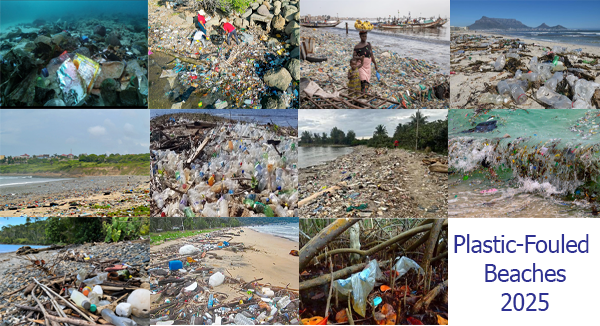
Each target on the map represents one of the places significantly affected by plastic and links to information about the sources of plastic with an image. Here are the images of the beaches highlighted in The Transition newsletter in 2025.
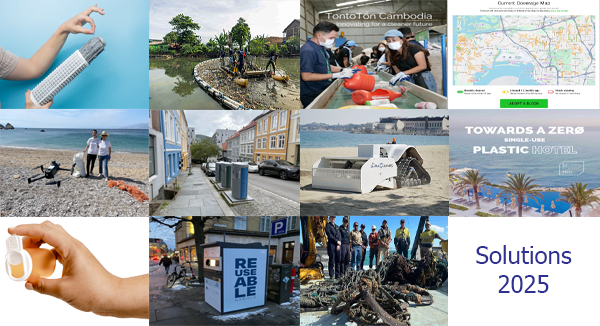
(From left to right, top to bottom): Phuket Island, Thailand; Kingston Harbour Mangroves, Jamaica; Hann Bay Beach, Dakar, Senegal; Milnerton Beach, False Bay, Cape Town, South Africa; Kpoete Beach, Prampram, Ghana; Carenage Beach, Trinidad and Tobago; Playa de Cojímar, Havana, Cuba; Chaweng Beach, Koh Samui Island, Thailand; Palmera Beach, Gorgona Island, Colombia; Tioman Island, Rompin, Pahang, Malaysia; Biscayne Bay, Miami's Mangroves. Solutions Digital Library OpenOceans is a solutions-oriented non-profit. Our open access digital library offers curated solutions from around the globe. Visitors can research solution options that best fit their needs, ranging from packaging and policy to river intervention and alternative materials. Here are the solutions recognized in 2025.
(From left to right, top to bottom): PlanetCare Microfibre Filters; Plastic Fischer; TonToTon; Street Stewards; Coastal Marine Litter Observatory; Envac - Vacuum Tubes for Waste Collection; BeBot; A Zero Plastic Waste Methodology for Hotels; SnapSlide RX Vials; TOMRA Reusable Takeaway Packaging; Tangaroa Blue, Project Recon. Expertise Broadened Through Deeper Dives in 2025 OpenOceans is a trusted source. In each issue of The Transition, we take a Deeper Dive into one or more researched topics to help share information and expand reader subject matter expertise in stories like these.
Quick Access to News - 150 Plastic News Links In 2025, The Transition included links to nearly 150 news stories we think are important and that you might not know about. These links come from our broad research into scientific reports, trends related to plastic pollution, and from information sent by OpenOceans supporters. Awards, Support, and Partnerships
P.O. Box 22971 Donations at every level are appreciated. OpenOceans Global is a 501c3 not-for-profit organization.
|