Solving ocean crises by unifying and empowering global communities!sm
With the help of donors like you, OpenOceans Global is developing solutions to save our ocean.
With the help of donors like you, OpenOceans Global is developing solutions to save our ocean.
Title search: ✖
|
Show All (49)
General (8) OpenOceans News (2) OPP Initiative (1) Plastic Treaty (9) Press Releases (2) Solutions (8) Trash and Plastics (24) White Papers (1)
New Report Provides Global Criteria to Address Problematic, Unnecessary, and Avoidable Plastic Products
Corporate Plastic Pollution Scorecard provides an in-depth review of the plastic packaging practices
|
How single-stream recycling works—your choices can make it better
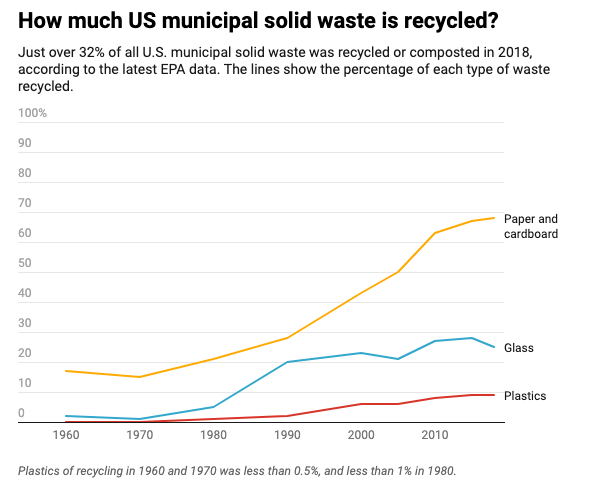
Image credit: PHYS.ORG We’ve written before about wish-cycling, the tendency to hope that what you put in the recycling bin is actually recycled. An April 17, 2025, article in PHYS.ORG reviews the current status of recycling in the U.S. Single-stream recycling is the term given to the process where we put all of our recyclable material in a single bin, understanding that it will be recycled. A 2019 report by The Recycling Partnership found that 15 – 25% of materials in single-stream processes end up in the landfill. Less than 9% of all plastic is recycled in the U.S. But why? According to PHYS.ORG, “Contamination, such as food residue, plastic bags and items that can't be recycled, can degrade the quality of the remaining material, making it more difficult to reuse. That lowers its value. Having to remove that contamination raises processing costs and can force recovery centers to reject entire batches.” Some plastics typically can not be or are difficult to recycle.
These three plastics can be recycled in many facilities.
However, even these materials have challenges. When ground up PET, HDPE, and polypropylene are placed in water, the PET sinks and can be separated from the other two. The HDPE and polypropylene both float and can't be recycled together. So, more advanced and expensive technology is often required to separate those two materials, making them unattractive for recycling by some facilities. If they are mixed and attempted to be recycled into new plastic, they are often brittle and unusable for new products. PHYS.ORG says “You can help the recycling process by taking a few minutes to wash off food waste, avoiding putting plastic bags in your recycling bin and, importantly, paying attention to what can and cannot be recycled in your area.”
|