Solving ocean crises by unifying and empowering global communities!sm
With the help of donors like you, OpenOceans Global is developing solutions to save our ocean.
With the help of donors like you, OpenOceans Global is developing solutions to save our ocean.
Title search: ✖
|
Show All (49)
General (8) OpenOceans News (2) OPP Initiative (1) Plastic Treaty (9) Press Releases (2) Solutions (8) Trash and Plastics (24) White Papers (1)
New Report Provides Global Criteria to Address Problematic, Unnecessary, and Avoidable Plastic Products
Corporate Plastic Pollution Scorecard provides an in-depth review of the plastic packaging practices
|
Plastic treaty negotiations fail to reach an agreement
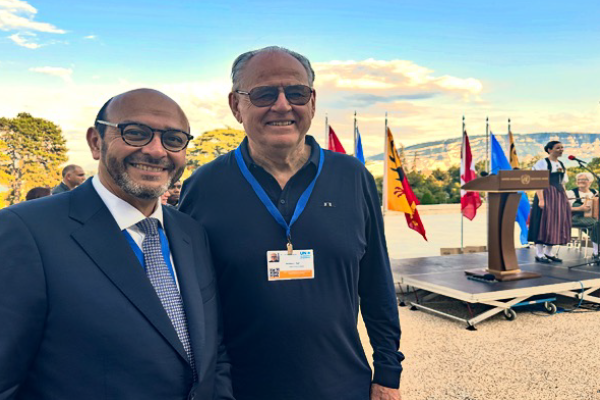
Ambassador Luis Vayas Valdivieso, the chair of the United Nations Plastic Pollution Treaty negotiations, with OpenOceans founder Carl Nettleton in Geneva. Lost luggage necessitated Nettleton’s informal attire. OpenOceans Global was onsite at the United Nations Plastic Pollution Treaty negotiations (INC-5.2), August 5-14, 2025, in Geneva, Switzerland. While many of the negotiating parties felt that progress had been made, the treaty process was stymied by the inability of all nations to come to a consensus. Environmental organizations and the countries that sought a strong treaty continued to focus on capping plastic production, which the petro states are unlikely to agree to. The business community continued to focus on circularity and recycling as the answer. New language rejected by delegates With the above positions firmly established, Chair Luis Vayas Valdivieso had a challenge in trying to bridge the gap. He proposed a new draft on the last day that included language addressing plastic pollution but not containing the words "capping plastic production." It was rejected. Slightly edited, the language is summarized below: 1) Each Party shall take appropriate measures in accordance with its national circumstances and capabilities to manage, reduce, or not allow the manufacture, export, or import of plastic products that meet one or more of the following criteria. a) Have a high likelihood of entering the environment and for which existing waste management systems do not prevent such likelihood; b) Pose an unacceptable risk to human health or the environment; c) Are difficult to or not capable of being reused, recycled, composted, or redesigned to achieve reusability, durability, repairability, and refurbishability; d) Disrupt or inhibit the circular economy on a large scale; e) Contain a chemical or chemicals of concern to human health or the environment; or f) Contains intentionally added microplastics. This language seems to address the key pollution aspects required of the treaty and could be a good start to future discussions. Next up: a new meeting place and date The next steps involve determining a location and date to continue the talks. Some observers are calling for an abandonment of the consensus-based process and hoping a decision can be made by majority vote. Failing that, others think a coalition of the willing can craft an agreement independent of the UN that will serve their interests. |