Plastic pollution as a virus
Why OpenOceans’ plastic beach trash map is different
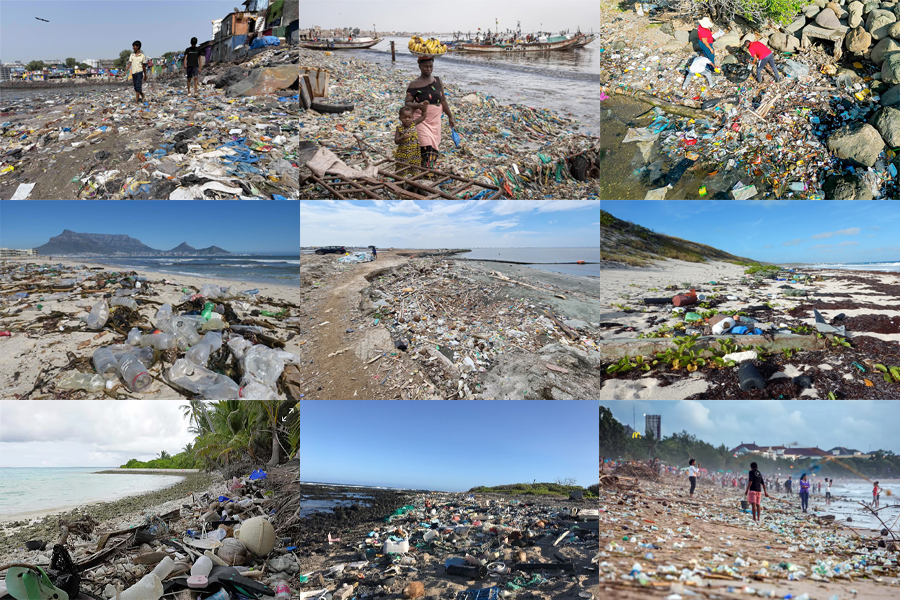
The images above are examples of some of the worst plastic pollution outbreaks and are featured on OpenOceans’ Plastic Trash Map.
- Top row: Badhwar Park Beach, Mumbai / Hann Bay, Dakar / Kingston Harbor, Jamaica.
- Middle row: Milnerton Beach, Capetown / Navotas, Philippines / Tilloo Cay, Bahamas.
- Bottom row: Cocos (Keeling Island), Australia / Kamilo Beach, Hawaii / Kuta Beach, Bali
Many organizations are mapping plastic pollution on beaches. The Ocean Conservancy’s Clean Swell App, NOAA’s Marine Debris Monitoring and Assessment Project, National Geographic’s Marine Debris Tracker, Litterati, and the Ocean Cleanup Survey App are some well-known examples. Each of these excellent and respected tools documents volume, type, and/or brand to provide data about how to eliminate particular categories of plastic that reach the beaches.
Looking for outbreaks of plastic on beaches
OpenOceans Global’s Plastic Trash Map is different. It seeks to document, with images, the worst outbreaks of plastic on the world's beaches and coastlines. The goal is to then find the pathways by which plastic reaches those beaches and help local leaders with solutions to plug the points of contamination on those pathways.
Collecting images with geolocation data and confirming dates is challenging. We find many images like those above, but most have little or no additional information, particularly geolocation data. Social media images, in particular, lack documentation. Some studies and reports reference beaches but have no pictures.
Our goal is to geolocate and visualize the outbreaks of plastic on the beaches and other shorelines of the world to understand where solutions are most needed.
Because 75% of ocean plastic is on a beach or shoreline, finding those beaches is a good proxy for understanding the problem.
Plastic Pollution as a virus
OpenOceans thinks of plastic pollution as a virus, and outbreaks of the plastic "virus" are found on the world’s beaches. The Johns Hopkins Covid-19 map of outbreaks mapped where that coronavirus had propagated, and local health officials worked to stop the transmission of the virus to eliminate or reduce the size of the outbreak.
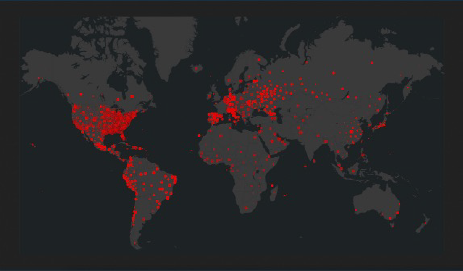
Most of us have seen the map of Covid-19 outbreaks. Image credit: Johns Hopkins University
Documenting the outbreaks of ocean plastic
Using the same Esri technology as the Johns Hopkins map, OpenOceans Global’s Plastic Trash Map is documenting the outbreaks of ocean plastic to learn where the world needs to stop the transmission of the plastic and plug the leaks into the environment before the plastic reaches the beaches and the ocean.
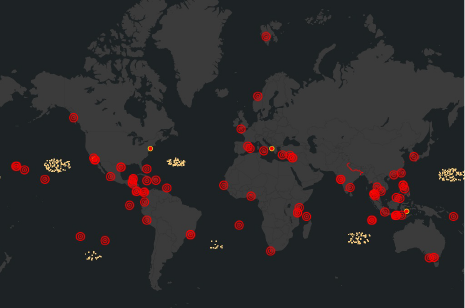
The OpenOceans map shows some locations in the world where pervasive outbreaks of plastic pollution have been documented. Each icon links to a photo and contains background information.
Image credit: Esri ArcGIS Online / OpenOceans Global
We know there are more beaches to document. Help us find them!
It’s one thing to think about ocean plastic pollution conceptually. It’s quite another thing to see what it looks like on the most trashed beaches in the world.
Our citizen science survey tool allows anyone to take a photo of a beach fouled by plastic and to submit it directly to the map for verification. Or you can upload an image and locate it on the map in the survey.
Please help us document the outbreaks of plastic in your part of the world.
We have a one-page guide called “This, not that” to help you understand whether a beach meets the criteria necessary for inclusion.
Share: https://www.openoceans.org/blog/Blog53/Plastic-pollution-as-a-virus-Why-OpenOceans-plastic-beach-trash-map-is-different
Share Category "OpenOceans News":
https://www.openoceans.org/blog/BlogCategory21/OpenOceans-News
Share Category "Trash and Plastics":
https://www.openoceans.org/blog/BlogCategory6/Trash-and-Plastics