| |
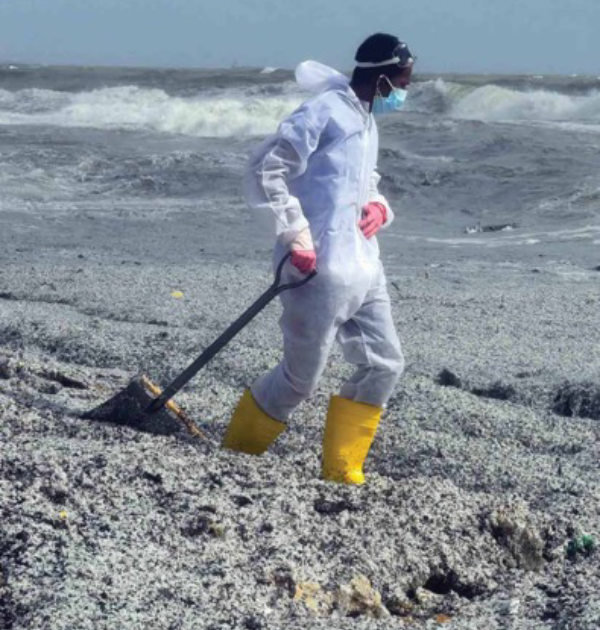
A man with a shovel, wading through an ankle-deep sea of plastic pellets. Image credit: ITOPF.org
In 2023, more than 310 million tonnes of plastic pellets were produced worldwide, according to CEDRE, a company with International expertise in accidental water pollution. Plastic pellets are released into the environment as a result of possible operational losses throughout the production and processing chain or accidental losses during transport (by sea, river, rail, or road).
According to the NGO Fauna & Flora, wildlife mistake pellets for food, which can lead to starvation and/or organ damage. Pellets can also smother sensitive coastal ecosystems such as seagrass beds, threatening the species that use these habitats for breeding or feeding. “Build-up of pellets in the environment over time or from a large spill can have devastating impacts on local communities and economies, including fishing and tourism industries and the right of communities to a clean, healthy and sustainable environment.”
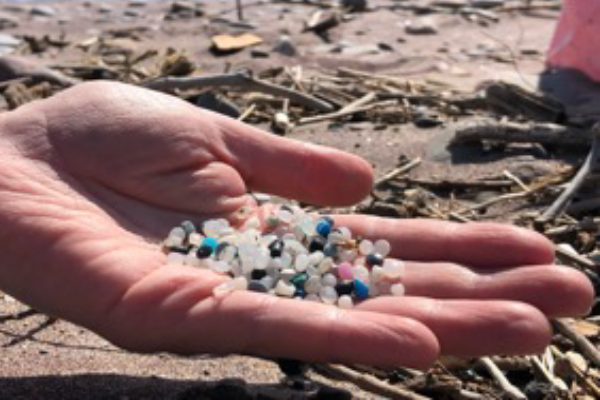
Plastic pellets (nurdles). Image credit: 5 Gyres Institute
According to 5 Gyres Institute, plastic pellets (also known as nurdles), are round microplastics (1–5 mm in diameter) that serve as the building blocks of most plastic products, from bottles and forks to car parts. Pellets are produced from fossil fuels and transported, via truck, train, or ship, to other facilities to be manufactured into the plastic products you see every day. There are two basic types of plastic pellet pollution, according to The Nurdle Hub.
-
Acute pellet pollution: These are major incidents where a large amount of pellets are spilled at once. These pollution incidents typically happen during the transport of pellets but can also occur if a site is flooded.
-
Chronic pellet pollution: Continuous, or ongoing pollution where plastic pellets are lost regularly from everyday site operations (e.g. producers, converters and recyclers) is how most nurdles are lost.
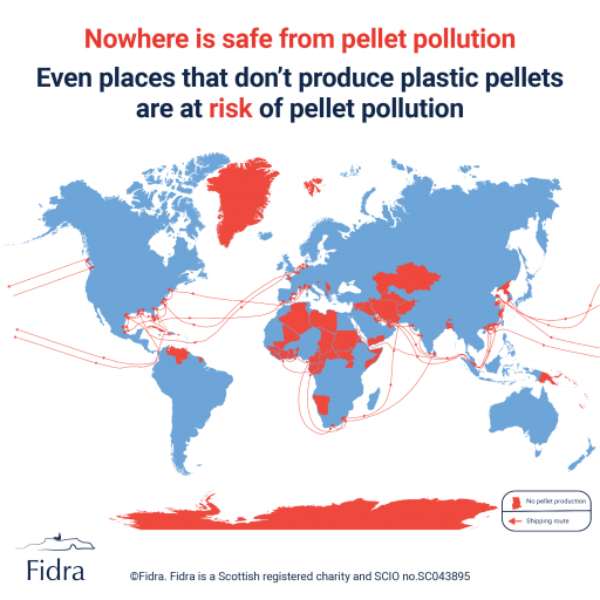
Image credit: Fidra
It’s estimated that 230,000 tons of nurdles are lost to the environment each year, with leakage from a single production site ranging from 3 to 36 million pellets annually. 5 Gyres reports that, “Nurdles are the second-largest source of ocean microplastics after tire dust (by weight).”
Solutions
In the U.S., there are no regulations in place to prevent the loss of nurdles to the environment each year. Recently proposed federal legislation, the Plastic Pellet Free Waters Act, would direct the Environmental Protection Agency (EPA) “to prohibit the discharge of plastic pellets and other pre-production plastics into waterways, storm drains, or sewers. The legislation focuses on facilities that make, use, package, or transport plastic pellets or other pre-production plastic materials.”
The Nurdle Hub tracks nurdle spills and the response in its Global Spills Log and identifies steps that can be taken to solve the problem, on land and at sea, through science, education, corporate engagement, policy, and legislation.
In addition, an international plastic treaty could mandate national legislation compatible with other international agreements. The treaty could also implement measures to eliminate pellet loss in terrestrial and marine environments and mechanisms for accountability in the case of spills and ongoing loss.
|