Solving ocean crises by unifying and empowering global communities!sm
With the help of donors like you, OpenOceans Global is developing solutions to save our ocean.
With the help of donors like you, OpenOceans Global is developing solutions to save our ocean.
Title search: ✖
|
Show All (49)
General (8) OpenOceans News (2) OPP Initiative (1) Plastic Treaty (9) Press Releases (2) Solutions (8) Trash and Plastics (24) White Papers (1)
New Report Provides Global Criteria to Address Problematic, Unnecessary, and Avoidable Plastic Products
Corporate Plastic Pollution Scorecard provides an in-depth review of the plastic packaging practices
|
Plastic Treaty Update - December 2025
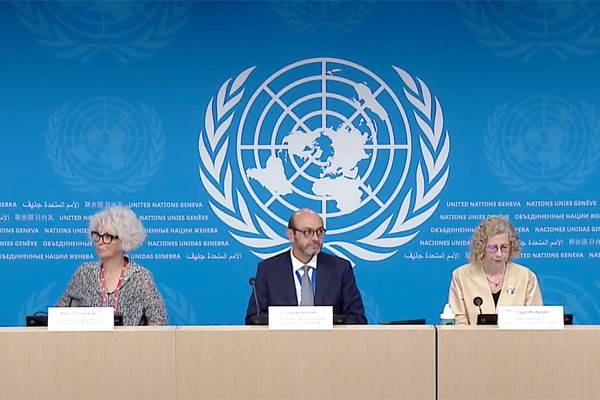
As we reported in the August issue of The Transition, the plastic treaty International Negotiation Committee (INC) discussions were adjourned without a conclusion early in the morning of August 15 in Geneva. On September 10, 2025, a report detailing the work of the INC at the Geneva meeting was released by the United Nations Environment Programme (UNEP). In October, Ambassador Luis Vayas Valdivieso, the INC chair, resigned from his position for personal and professional reasons. Vayas is also Ecuador’s ambassador to the United Kingdom. There is no schedule that has yet been released for when the negotiating sessions will restart since there is no current chair of the INC. A new chair will likely be appointed at a special one-day on February 7, 2026, in Geneva to elect new officers, including a new chairperson. Candidates who have submitted applications to be the new chair have come from Chile, Senegal, Pakistan, and Iraq. The Iraqi candidate has since dropped out. Locations for the next negotiating session have been floated and include Berlin, Tokyo, and a return to Geneva. Who will finance the talks is also a question. Switzerland’s federal office is not currently considering offering to host, according to some sources. A challenging negotiating environment Ambassador Vayas faced a challenging negotiating environment in which he used facilitative strategies to achieve a consensus-based agreement. Environmental groups and the High Ambition Coalition of countries demanded language to cap plastic production, something that the Like-Minded group of petrostates, supported by plastic industry lobbyists, could not agree to. They preferred focusing on recycling and waste management, which was unacceptable to the High Ambition group that wanted what they call a strong agreement. In that environment, Vayas proposed language late in the sessions that did not include capping production but instead focused on agreeing to not manufacture, export or import plastic products that could end up polluting the environment, causing harm to human health, or inhibiting the circular economy. While his language could have begun to “reduce plastic production” in areas most needed without using those words, his draft proposal was not accepted, and language calling for caps on plastic production was reinserted in the draft, which helped to stall the negotiations. |